Tips for small boat batteries
Small boat batteries need to be chosen carefully to ensure reliable starting, stable power supply for equipment, and good durability. Even in smaller vessels, the battery may operate under humidity, vibration, and load variation, which requires the correct application.
More than simply looking at the size of the boat, it is important to consider the type of use, the installed accessories, and the capacity required for the electrical system.
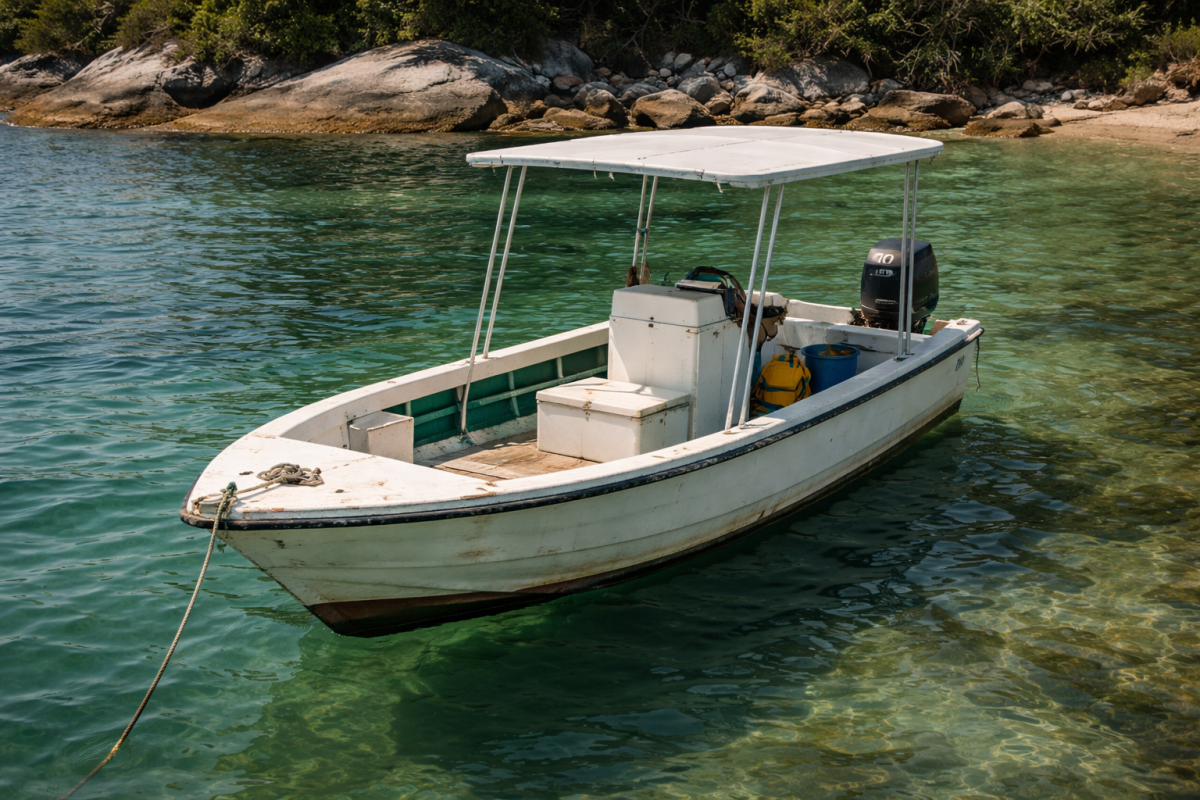
What should you consider when choosing a battery for a small boat?
The main point is to evaluate the vessel’s electrical demand and type of use.
A small boat may have simple or more intense requirements, depending on the installed equipment. Items such as lighting, pump, sonar, and radio directly influence the choice of battery.
In practice, it is worth observing:
- Type of engine
- Number of accessories
- Usage time with the engine off
- Navigation frequency
- Available installation space
Which battery is most suitable for a small boat?
In most cases, a marine battery is the most suitable option for this type of application.
This is because it is developed to better handle vibration, humidity, and typical requirements of the onboard environment. This care makes a difference in the performance and safety of the electrical system.
How to choose the correct battery capacity for a small boat?
The correct capacity depends on the vessel’s electrical demand and usage profile.
In a small boat, it is common to imagine that any compact battery can work well. However, the choice needs to take into account amperage, starting requirements, accessory consumption, and the amount of time these devices remain turned on.
Some points help with this evaluation:
- Number of installed accessories
- Intensity of use of these devices
- Navigation frequency
- Time spent with the engine off
- Need for energy reserve for a new start
What precautions help a small boat battery last longer?
Durability depends both on the correct choice and on the way the battery is used and installed.
In small vessels, the battery is usually placed in compact spaces and more exposed to vibration and humidity. This means that seemingly simple details can have an important impact on performance over time.
Some precautions help a lot:
- Keep the battery securely fastened
- Avoid frequent deep discharge
- Check cables and connections
- Clean the terminals to prevent corrosion
- Use proper recharging
- Avoid long periods without charging
- Protect the installation from excessive humidity
This type of care helps preserve performance over time and is directly related to marine battery durability.
How to avoid electrical problems in small boats?
The best way to avoid failures is to combine the right battery, correct installation, and preventive maintenance.
Many electrical problems appear when the battery is chosen only based on availability or price, without considering the real application. In small boats, this can result in irregular starting, accessory failure, and frequent need for recharging.
Among the most common mistakes are:
- Using a battery that is not suitable for marine use
- Installing a capacity below the demand
- Leaving accessories on for too long with the engine off
- Ignoring signs of corrosion
- Not checking the charging system
- Keeping the vessel stopped for long periods without recharging
Which signs deserve attention?
Some signs show that the battery may be under more strain than it should be:
- Slow starting
- Weak lights
- Accessories turning off by themselves
- Rapid loss of charge
- Constant need for recharging
- Oscillation in equipment operation
When these signs begin to appear, it is worth observing the battery’s behavior more carefully to avoid failures during navigation.
Is it worth investing in a higher-quality battery for a small boat?
Yes, because electrical reliability remains essential even in smaller vessels.
In a small boat, the battery still plays an important role in starting the engine and powering auxiliary systems. When the product does not meet this requirement, the impact appears in autonomy, safety, and overall durability.
Choosing a battery developed for marine applications helps deliver:
- Greater electrical stability
- Better resistance to vibration
- Suitability for humid environments
- Lower risk of premature failures
- More consistent performance during use
Technological Differentials of Tudor Náutica
Tudor Náutica batteries are developed with specific technologies to overcome the challenges of the marine environment, offering greater durability and reliability. Their differentials include:
- Diamond-Shaped Grids: The negative plates feature a diamond-shaped design that improves active mass adhesion and electrical conductivity. This results in greater resistance to corrosion and an extended service life, even under constant vibration.
- Structured Positive Plates: Manufactured with high-quality lead and special additives, these plates offer high resistance to discharge and recharge cycles, maintaining starting and service capacity for longer.
- Polyethylene Envelope Separators: They contribute to low electrical resistance and controlled microporosity, optimizing ionic exchange and battery performance.
- Copolymer Polypropylene Plastic Case: Ensures high resistance to impacts and vibrations. The cover incorporates labyrinths and a double flame-arresting filter, increasing safety in confined environments.
- Maintenance-Free: Sealed technology eliminates the need to add water, providing greater convenience and safety for the user.
- Dual Terminals: The presence of screw-type terminals, eyelet, and conical terminals allows multiple and more robust connections, essential for resisting vessel vibrations.
- Charge Indicator: An integrated display allows quick viewing of the battery’s state of charge through three colors, charged, discharged, and overcharge.
| Model | C20 (Ah) | CCA (A) | RC (min) | Suggested Application |
|---|---|---|---|---|
| TNF30D | 30 | 105 | 40 | Small boats with basic electronics |
| TNF75E | 75 | 550 | 120 | Small speedboats, fishing boats with sonar and radio |
| TNF105D | 105 | 800 | 190 | Medium-sized speedboats, sailboats with a more robust electrical system |
Conclusion
Choosing the right battery for a small boat requires considering the application, electrical consumption, and usage care. When the capacity is correct and the installation is well done, the vessel tends to operate with greater safety and stability.
In addition, preventive maintenance helps preserve battery performance and reduce the risk of failures during navigation.
To learn more about Tudor’s options for marine applications, it is worth consulting the brand’s catalog and following the blog content with guidance on use, maintenance, and performance.
Frequently asked questions about small boat batteries
Can I use an automotive battery in a small boat?
It is not the most recommended option, because the marine environment requires greater resistance to humidity, vibration, and load variation.
How do I know if the battery is below the boat’s needs?
Weak starting, rapid discharge, and accessory failures are common signs of insufficient capacity.
What helps increase battery service life?
Correct choice, proper fastening, adequate recharging, and terminal maintenance help a lot with durability.
Read also
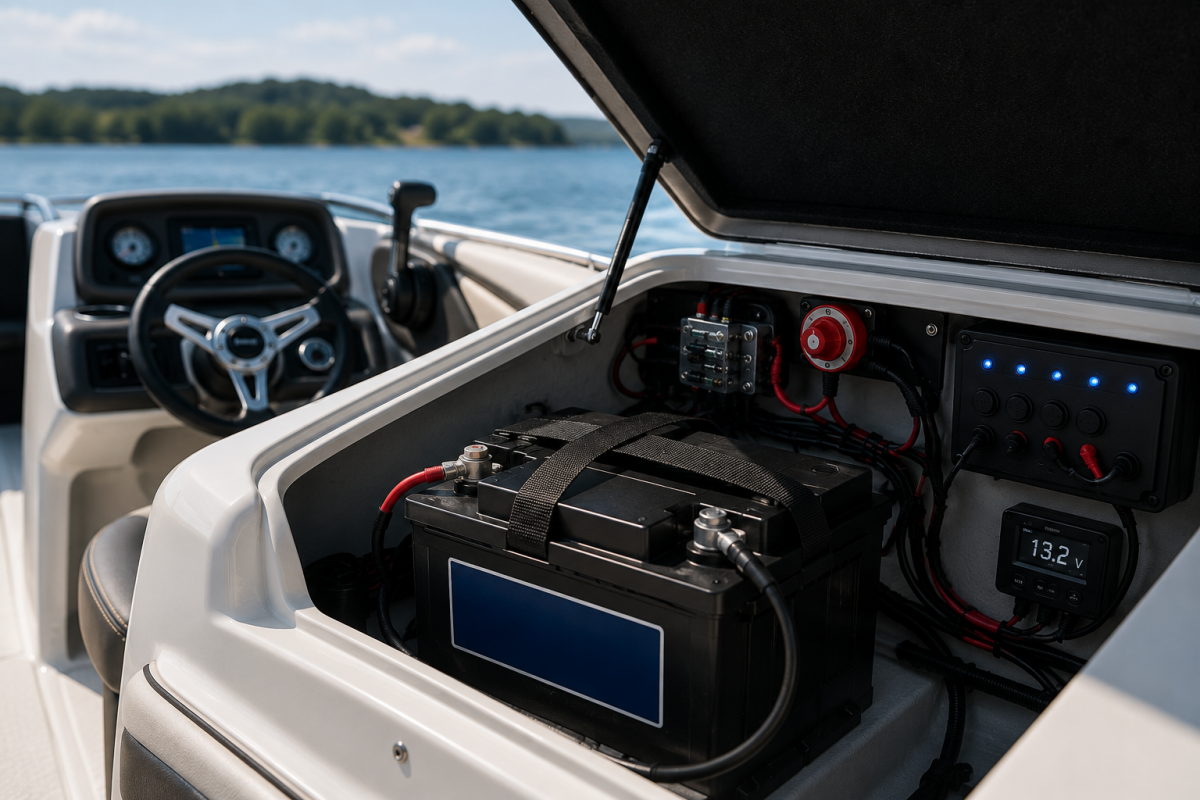
What is a deep-cycle marine battery and when is it recommended?
Not every marine battery performs the same function. While some are designed to deliver a high current when starting the engine, others are designed to power electrical equipment for long periods, whether the vessel is underway or anchored. This is where the deep-cycle battery stands out. Its construction was developed to withstand successive discharge and recharge cycles, providing continuous energy for systems that require autonomy during navigation. In this article, you will understand what characterizes a deep-cycle marine battery, when it is recommended, and why choosing the correct application makes all the difference to vessel performance.
Continue reading
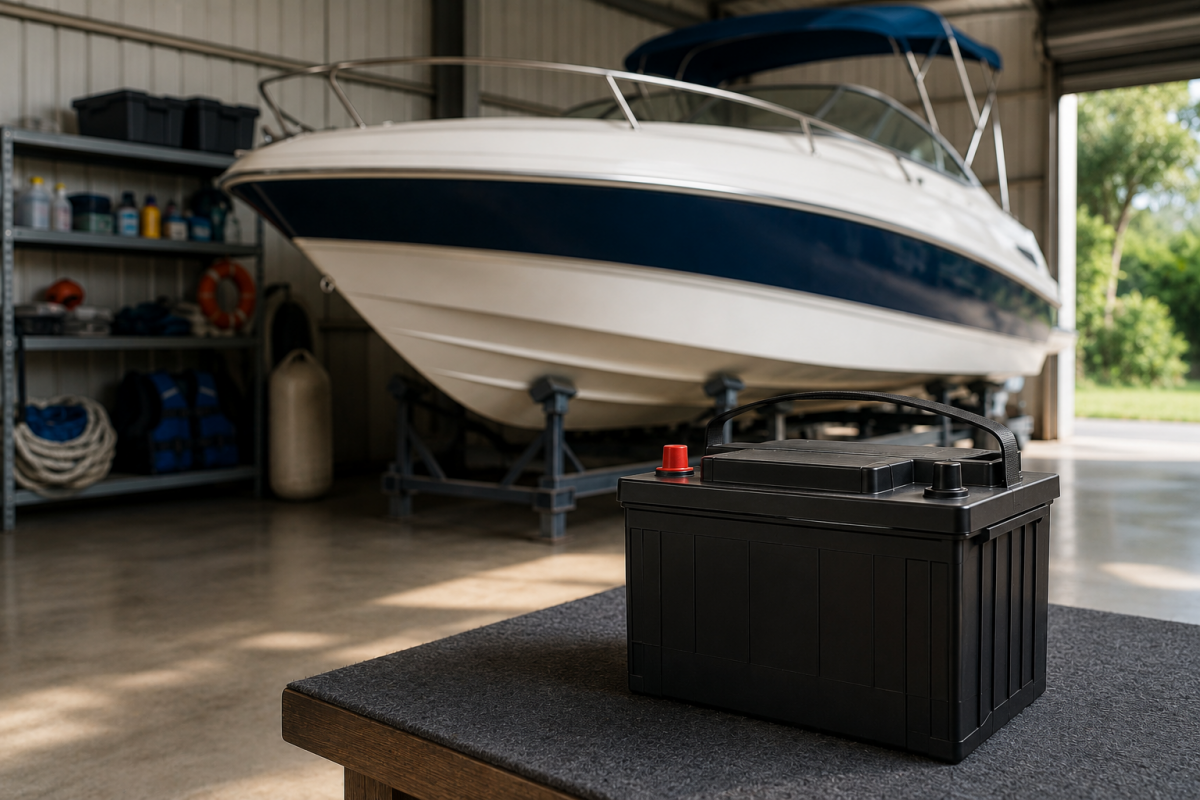
How to store a marine battery during the off-season
Not every vessel remains in use throughout the year. In many cases, boats, motorboats, and sailboats remain idle for weeks or even months during the off-season, whether due to weather conditions, maintenance, or less frequent navigation. Although this period of inactivity is common, it requires some care with the battery. When stored without proper maintenance, the battery can naturally lose charge, undergo internal degradation processes, and have difficulty operating the next time the vessel is used. The good news is that a few simple measures help preserve battery performance during this period, extending its service life and reducing the risk of unexpected problems when it is time to return to the water.
Continue reading
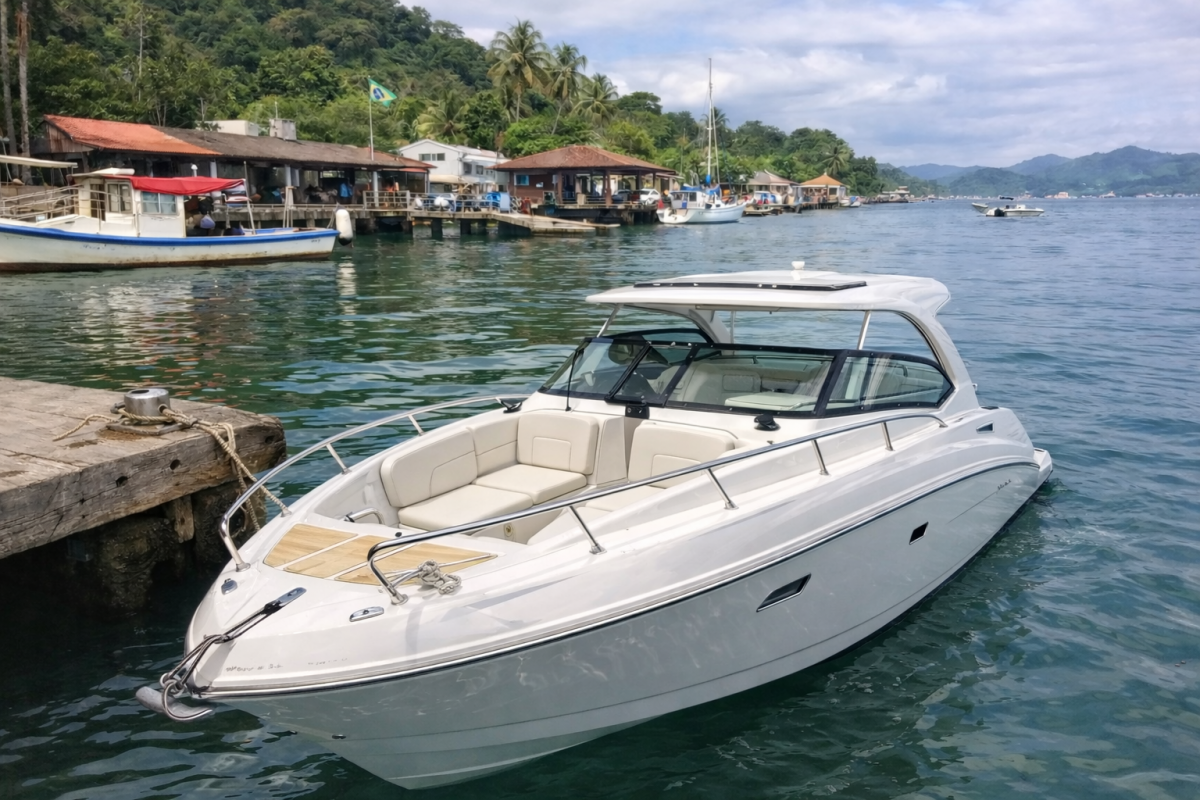
Boat battery: a practical guide to choosing correctly
Choosing a boat battery requires more than finding a similar model for the vessel. To make the right choice, you need to check dimensions, capacity, terminal position, and the correct application for marine use. This makes a difference because a boat operates in a more demanding environment, with humidity, vibration, and variation in electrical demand. In addition to starting the engine, in many vessels the battery also needs to power onboard equipment, which makes the correct choice even more important.
Continue reading