How to tell if your marine battery is weak
Knowing whether your marine battery is weak is essential to avoid starting failures, loss of onboard equipment operation, and unexpected issues during navigation. On vessels, the battery may be exposed to vibration, humidity, long periods without use, and variable electrical demand, which makes monitoring its performance even more important.
In practice, a weak battery does not always stop working all at once. In many cases, it begins to show gradual signs, such as reduced autonomy, difficulty starting, and instability in the power supply. Identifying these signs in advance helps preserve navigation safety and avoid emergency replacements.
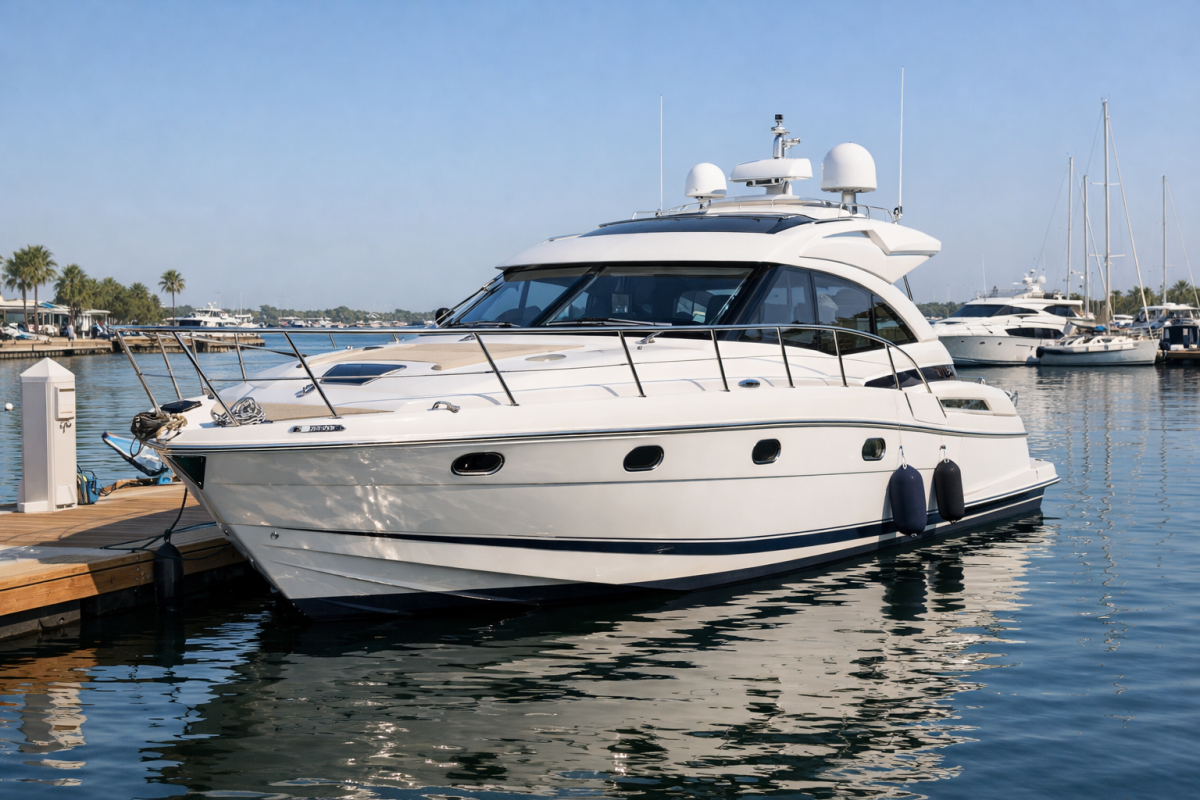
What signs indicate that the marine battery is weak?
The most common signs are slow starting, rapid loss of charge, and failures in the operation of electrical equipment.
In daily vessel use, performance loss usually appears first in situations of higher demand. The engine start may become slower, accessories may lose stability, and the battery may discharge in less time than usual.
Among the most frequent signs are:
- Difficulty starting
- Engine cranking with less force
- Weaker lights
- Failure in GPS, sonar, radio, or pump
- Rapid discharge even after recharging
- Need to charge the battery frequently
- Voltage fluctuation on the panel
Important: these symptoms should be analyzed together. In some cases, the problem is not only in the battery, but also in cables, connections, alternator, or charge regulator.
This point complements the content about signs of battery problems on a boat.
How can you notice in practice that the battery has lost starting power?
When the battery is weak, starting tends to feel heavier and the engine responds less quickly.
Starting requires a high current delivery in a short period of time. When the battery loses capacity, this effort becomes more noticeable, especially after a few days with the vessel stopped or in situations where accessories are used frequently.
What should you observe at the moment of ignition?
Some behaviors help identify performance loss:
- Slower, dragged-out starting sound
- Several attempts to start the engine
- Clicking sound from the system without full activation
- Panel lights fluctuating during start-up
- Accessories restarting at the moment of ignition
These signs may indicate low charge retention, voltage drop, or reduced useful battery capacity.
Attention: if the vessel demands a lot from the electrical system, a battery below the ideal capacity may also show these symptoms before the end of its service life.
What can weaken a marine battery ahead of time?
Frequent discharge, incomplete recharging, corrosion, and incorrect sizing are among the most common causes.
A marine battery works in a demanding environment. Humidity, vibration, salt air, and variations in use directly influence durability. When these factors are combined with a deficient charging system or an inadequate specification, performance loss tends to happen sooner.
The main causes include:
- Prolonged use with the engine off
- Frequent deep discharges
- Incomplete recharging
- Alternator or regulator failure
- Cables with poor contact
- Oxidized terminals
- Battery with capacity below the vessel’s needs
Why does the correct capacity make a difference?
A battery with amperage below the electrical demand constantly works at its limit. This accelerates internal wear, reduces reserve capacity, and compromises performance both when starting and when powering auxiliary systems.
Therefore, in addition to voltage, it is important to evaluate the application, the installed equipment, and the vessel’s usage profile.
This reasoning connects with the content about marine battery durability.
Is there a simple way to check if the marine battery is weak?
Yes. Starting behavior, charge retention, and equipment autonomy help a lot in the initial identification.
In daily use, some simple checks already make it possible to notice a drop in performance. They do not replace a technical evaluation, but they help understand whether the battery is maintaining the expected operation.
You can observe:
- Whether the engine still starts with the same strength as before
- Whether the accessories operate for the same usual amount of time
- Whether the battery loses charge quickly
- Whether there is corrosion on the terminals
- Whether the vessel has started to require more frequent recharges
Important: a battery may appear to have charge at certain moments and still have low real capacity. Therefore, the diagnosis should consider the vessel’s practical performance.
When can a weak marine battery indicate the need for replacement?
When the battery no longer provides reliability for starting and powering the equipment, replacement becomes a concrete possibility.
Every battery has a limited service life. When performance loss becomes recurring, simply recharging may no longer solve the issue. At this stage, replacing it at the right time helps avoid failures during vessel use.
Consider an evaluation for replacement when there is:
- Frequent difficulty starting
- Rapid loss of charge
- Constant accessory failures
- Recurring need for recharge
- Signs of advanced corrosion
- History of severe use or deep discharges
Tudor batteries for marine applications are developed to withstand more demanding usage conditions, with construction suitable for vessels that require electrical reliability, consistent performance, and greater operational safety. Choosing the correct battery, always compatible with the application, contributes to better durability and system operation.
Conclusion
Identifying whether a marine battery is weak requires observing starting behavior, equipment autonomy, and charge stability in the real use of the vessel. In many cases, performance loss appears gradually, with signs such as slow starting, accessory failures, and the need for more frequent recharging.
In addition, it is important to evaluate factors such as battery capacity, usage conditions, charging system, and the presence of corrosion on the terminals. When the battery no longer provides reliability for starting and onboard systems, technical evaluation and replacement at the right time help avoid failures and increase navigation safety.
Check our catalog for marine battery options, or Tudor’s specialized technical support can guide you in choosing the ideal battery for your vessel.
Frequently asked questions about weak marine batteries
Are a weak marine battery and a discharged battery the same thing?
Not necessarily. A discharged battery may recover its charge, while a weak battery may already have lost capacity and have compromised performance.
How long can a marine battery remain unused?
This varies according to state of charge, application, and storage conditions, but long periods without recharging may accelerate discharge and favor sulfation.
Is it worth recharging the marine battery, or is it better to replace it?
It depends on the condition of the battery. If it works normally again after recharging, it may still be in good condition. If it loses charge quickly or continues failing, replacement should be evaluated.
Read also
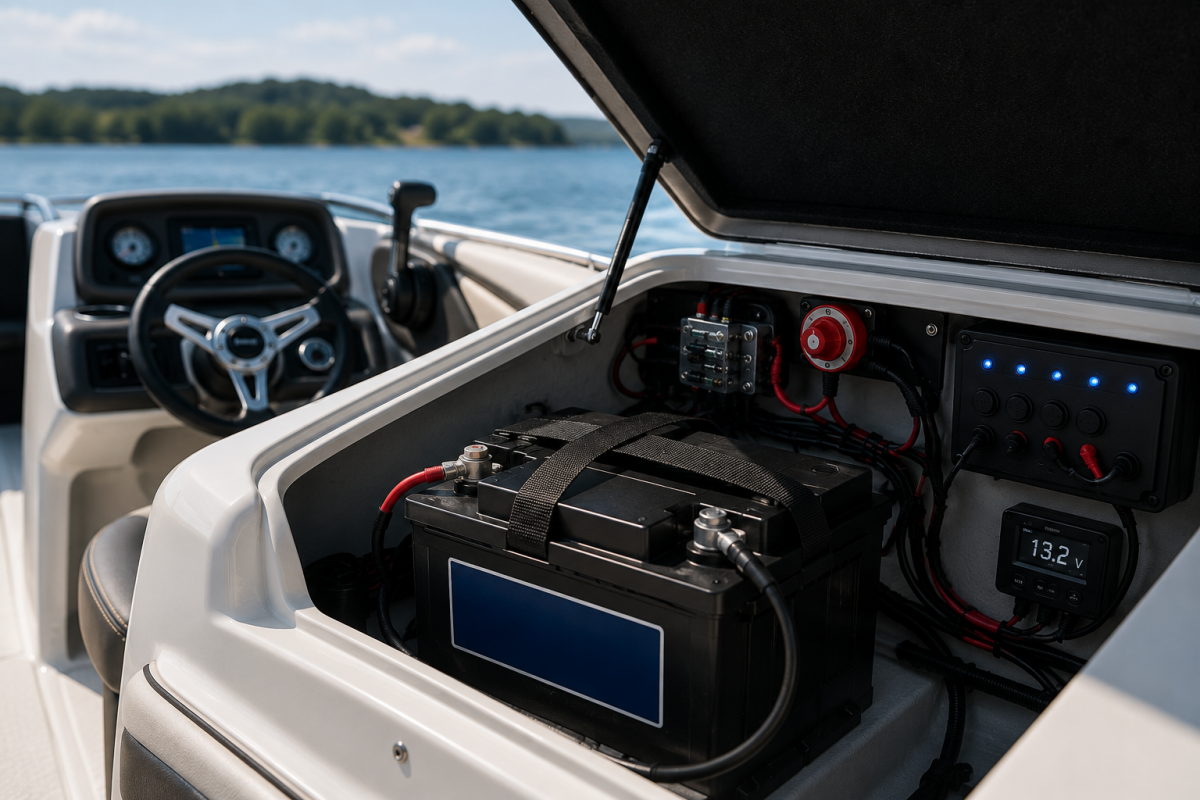
What is a deep-cycle marine battery and when is it recommended?
Not every marine battery performs the same function. While some are designed to deliver a high current when starting the engine, others are designed to power electrical equipment for long periods, whether the vessel is underway or anchored. This is where the deep-cycle battery stands out. Its construction was developed to withstand successive discharge and recharge cycles, providing continuous energy for systems that require autonomy during navigation. In this article, you will understand what characterizes a deep-cycle marine battery, when it is recommended, and why choosing the correct application makes all the difference to vessel performance.
Continue reading
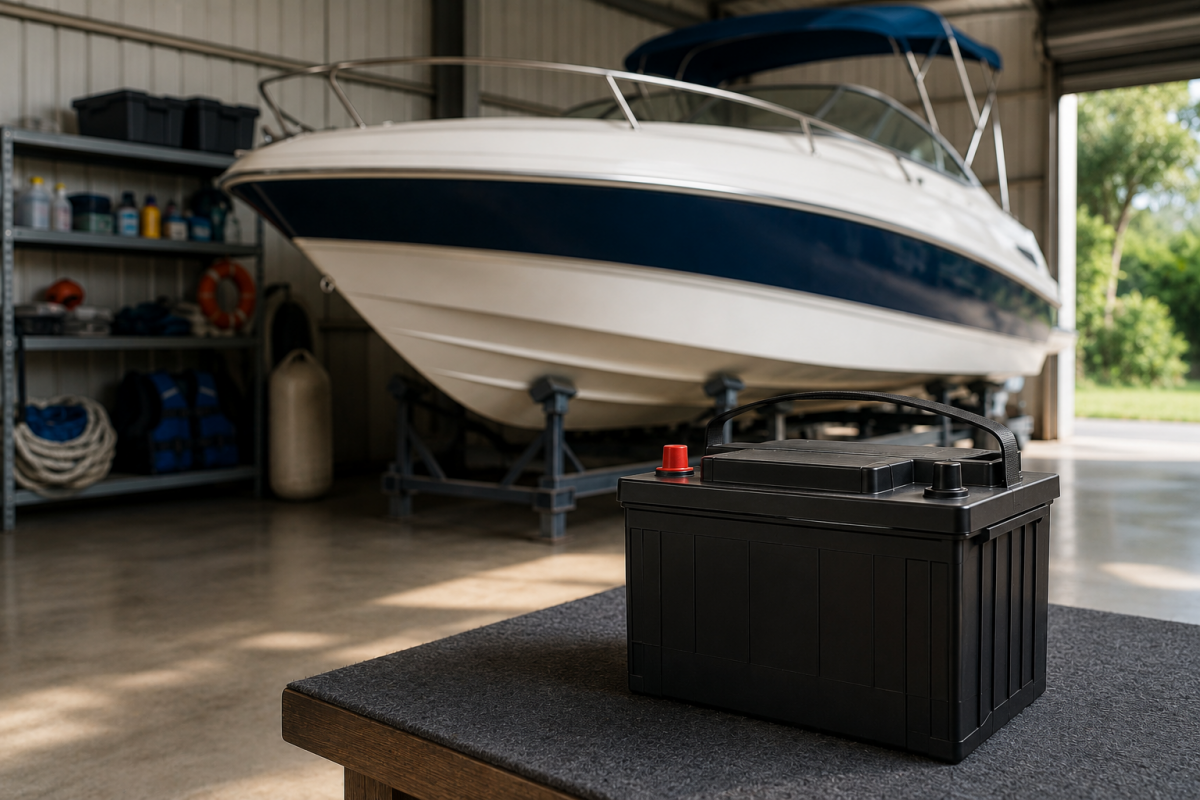
How to store a marine battery during the off-season
Not every vessel remains in use throughout the year. In many cases, boats, motorboats, and sailboats remain idle for weeks or even months during the off-season, whether due to weather conditions, maintenance, or less frequent navigation. Although this period of inactivity is common, it requires some care with the battery. When stored without proper maintenance, the battery can naturally lose charge, undergo internal degradation processes, and have difficulty operating the next time the vessel is used. The good news is that a few simple measures help preserve battery performance during this period, extending its service life and reducing the risk of unexpected problems when it is time to return to the water.
Continue reading
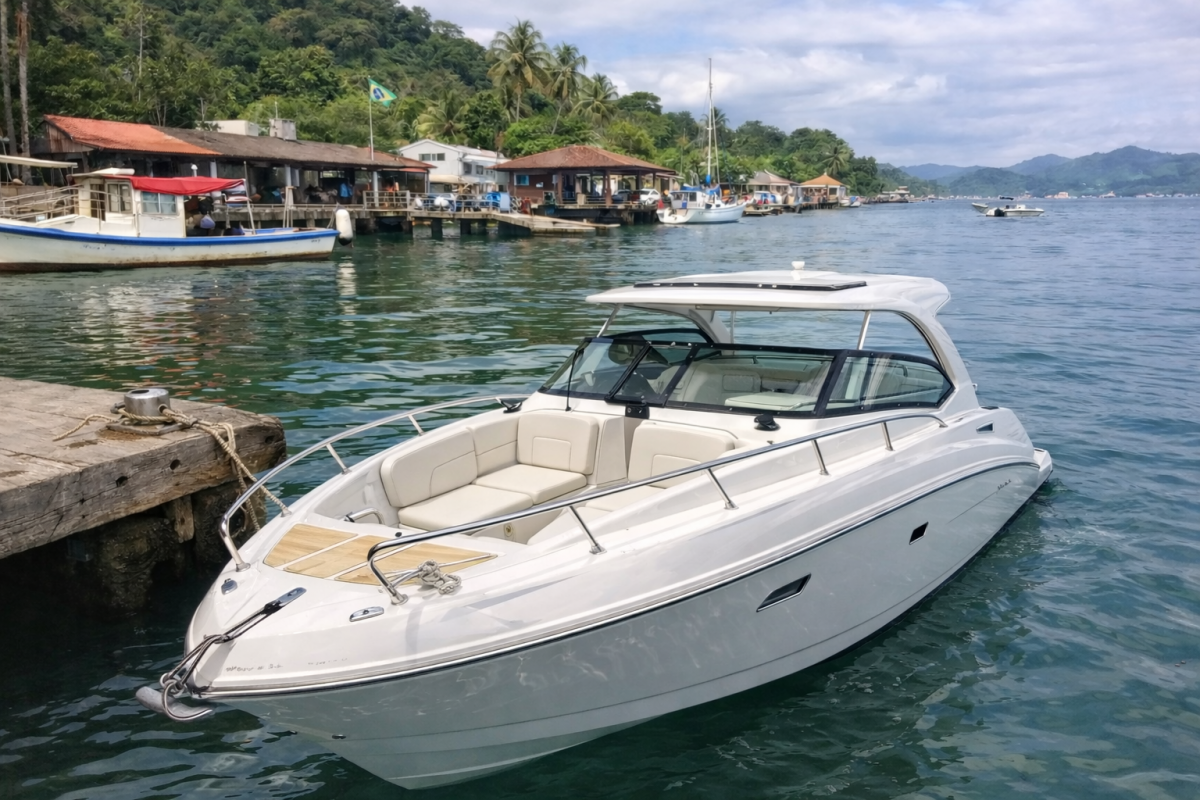
Boat battery: a practical guide to choosing correctly
Choosing a boat battery requires more than finding a similar model for the vessel. To make the right choice, you need to check dimensions, capacity, terminal position, and the correct application for marine use. This makes a difference because a boat operates in a more demanding environment, with humidity, vibration, and variation in electrical demand. In addition to starting the engine, in many vessels the battery also needs to power onboard equipment, which makes the correct choice even more important.
Continue reading