Everything you need to know about nautical batteries
The nautical battery is one of the most important components of a vessel and also one of the most demanded during navigation.
Unlike an automotive battery, which mainly works in quick starting cycles, a nautical battery needs to continuously supply power to electrical systems, navigation equipment, and accessories for long periods, often with the engine off.
In addition, it operates under severe conditions and more intense discharge cycles.
That is why understanding how a nautical battery works, which characteristics really make a difference, and what influences its durability is essential to avoid failures and ensure greater safety when using the vessel.
If you are still starting with this topic, it is worth first understanding what a nautical battery is and what it is used for, since this type of application has very different requirements from automotive use.
What is Dual Purpose technology?
A nautical battery needs to meet two types of demand at the same time.
The first is to provide high current for engine starting.
The second is to keep equipment running continuously, even with the engine off.
That is exactly why nautical batteries use Dual Purpose technology, developed to combine:
-
High Cold Cranking Amps (CCA)
-
Resistance to continuous discharges
In practice, this allows the battery to continue powering the vessel’s systems without compromising starting capacity.
Why does the nautical battery suffer more wear?
Nautical use brings together some of the factors that most accelerate internal battery wear.
The main ones are:
- Constant vibration during navigation
- Continuous exposure to humidity and sea air
- Frequent discharges
- Partial recharges
- High temperatures in closed compartments
When the battery is not developed for this type of application, problems such as early sulfation, increased internal resistance, and gradual capacity loss begin to appear.
This wear directly influences service life, as we explain in nautical battery: tips, definitions, and durability.
How does the battery’s construction influence performance?
The internal structure of the battery makes a direct difference in electrical stability and wear resistance.
In Tudor nautical batteries, some components play an important role in performance during use.
Reinforced grids
The internal grids help keep the active mass of the plates fixed, reducing damage caused by the vessel’s constant vibration.
In practice, this helps preserve the battery’s internal integrity for longer.
Polyethylene separators
The internal plates receive individual protection through microporous separators.
In addition to improving the efficiency of the chemical reaction, this system reduces mechanical damage caused by vibration during navigation.
Sealed lid with labyrinth system
This system reduces electrolyte loss by condensing the gases generated during battery operation.
This allows the battery to operate as a maintenance-free solution, with no need for water replacement.
What really defines the vessel’s autonomy?
Many users analyze only amperage (Ah), but in nautical use there is another extremely important indicator: Reserve Capacity (RC).
RC indicates how long the battery can sustain continuous consumption before reaching the critical discharge level.
In practice, it represents the vessel’s real autonomy with equipment on and the engine off.
This factor is essential mainly in:
- Speedboats
- Yachts
- Vessels with multiple electrical pieces of equipment
This type of sizing is explored in depth in battery for boats, speedboats, and yachts: how to choose the right technology.
Why do battery terminals require attention?
Sea air accelerates corrosion processes in the vessel’s electrical connections.
When this happens, the following can occur:
- Poor contact
- Voltage drop
- Loss of electrical efficiency
That is why nautical batteries use specific terminals for marine applications, offering firmer connections and greater resistance to corrosion.
In addition, protecting the terminals with solid petroleum jelly or liquid insulation helps preserve electrical conductivity over time.
How does the battery impact vessel safety?
The battery is responsible for keeping essential systems running during navigation.
Among them:
- Bilge pumps
- GPS and navigation
- Communication radio
- Lighting
An electrical failure can directly compromise the safety of the vessel and crew.
That is why choosing the battery should be treated as a technical decision, not just a commercial one.
Where does Tudor fit into this scenario?
After understanding the level of demand in nautical use, it becomes easier to understand why the battery’s construction makes such a difference.
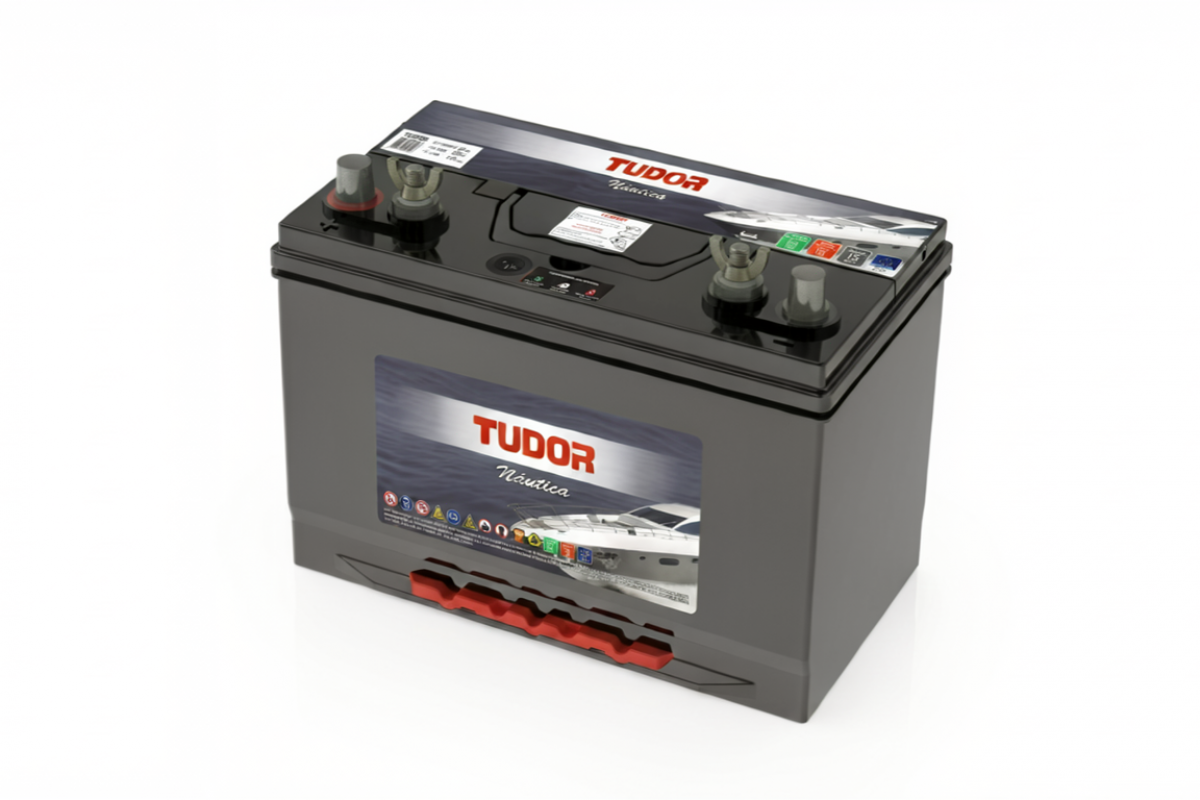
The Tudor Nautical line was developed specifically for this type of application, focusing on:
- Dual Purpose technology
- Greater vibration resistance
- Continuous electrical stability
- Sealed and maintenance-free construction
In addition, the line offers a 15-month warranty, one of the longest periods in the category, reinforcing the reliability of the application.
Conclusion
A nautical battery works under much more severe conditions than conventional applications, requiring mechanical resistance, electrical stability, and the ability to withstand continuous usage cycles.
Understanding how it works, what influences its durability, and how to identify signs of wear helps prevent failures and increases safety during navigation.
Within this scenario, the Tudor Nautical line was developed to meet exactly this level of demand, offering technology designed for marine applications and consistent performance over time.
To choose the ideal model, check the nautical battery options in our catalog or specialized technical support from Tudor can guide you in choosing the ideal battery for your vessel.
Frequently Asked Questions about nautical batteries
What does Dual Purpose technology mean?
It is the battery’s ability to meet both engine starting needs and the continuous use of electrical equipment.
What is more important in a nautical battery: Ah or RC?
Both are important, but Reserve Capacity (RC) helps define the vessel’s real autonomy.
How do I know if the nautical battery is reaching the end of its life?
When it shows rapid loss of charge, voltage drop, electrical failures, or difficulty starting.
Read also
Battery for boats, speedboats, and yachts: how to choose the right technology
Choosing a battery for a vessel requires a much more technical analysis than automotive use. In boats, speedboats, and yachts, the battery is not used only for starting, but also to sustain equipment for long periods, often with the engine off. In addition, the nautical environment imposes severe conditions such as constant vibration, humidity, sea air, and deeper discharge cycles. If you still have questions about this type of application, it is worth first understanding what a nautical battery is and what it is used for, since this completely changes the way it should be chosen.
Continue reading
Tudor Nautical: the best battery for your vessel
A nautical battery needs to operate at a much higher level of demand than an automotive battery. At sea or on rivers, it faces constant vibration, a saline atmosphere and, above all, prolonged use of equipment while the engine is off. The right choice directly impacts navigation safety, starting reliability and the operation of the vessel’s entire electrical system. If you still have questions about how this type of battery works, it is worth first understanding what a nautical battery is and what it is used for, since its application is very different from automotive batteries. In this scenario, the Tudor Nautical line stands out for its Dual Purpose engineering, which combines starting power with the ability to sustain continuous electrical consumption.
Continue reading