Is your car battery reaching the end? See the signs before failure
Contrary to what many drivers believe, a car battery rarely stops working suddenly. Most of the time it undergoes a progressive wear process, showing subtle signs weeks or months before total failure. Understanding this behavior is essential to act preventively, avoiding unexpected breakdowns, towing and everyday disruptions.
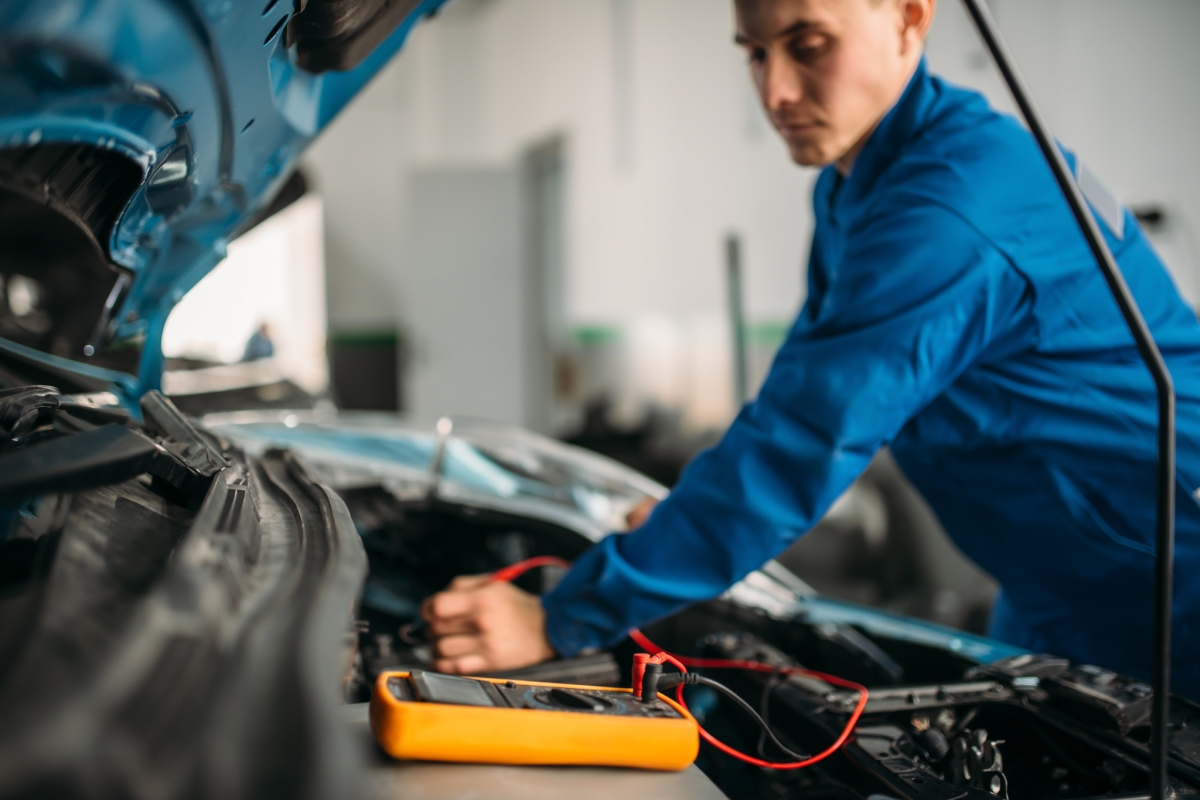
How does progressive wear of an automotive battery work?
Battery wear occurs when it gradually loses its ability to store charge and deliver energy consistently.
Over time, it’s common to see:
- Increase in internal resistance
- Reduction in real charge capacity
- Slower recovery after use
This process causes the battery to keep working, but in a less predictable way.
Are irregular engine starts a sign that the battery is near the end of its life?
Yes. Irregular starting is one of the most characteristic signs of a battery approaching the end of its lifespan.
Unlike a clearly weak or “heavy” start, the behavior usually varies:
- One day the car starts normally
- On another day, it takes longer
- After only a few hours parked, it already shows difficulty starting
This pattern indicates that the battery can no longer maintain consistent performance, which usually happens near the end of its useful life.
Why do the signs appear more often in the morning or after the car has been parked?
This can happen due to several isolated or combined factors. The most common are:
- Even with the car turned off, there is a constant electrical draw from systems that do not shut down completely, such as the alarm, power locks, ECU (electronic control unit), tracker, active communication with a keyless entry fob stored near the vehicle, and others. These modules and systems remain in standby mode, or may consume excessive current due to a defect, or even due to electrical leakage caused by faults in the system.
- At night and in the early morning, temperatures are lower. This reduces the internal chemical reactions of a battery that is already near the end of its life. After resting overnight, the available current for starting may be reduced, especially since starting requires a high current peak to power electronic systems and the starter motor.
When worn, the battery:
- Loses charge more quickly while at rest
- Suffers more after long periods parked
- Takes longer to recover
This behavior is common in vehicles that are driven infrequently, used mainly for short trips, or left unused for several days. These situations directly affect how long an automotive battery lasts, a topic explained in detail in this content about how long a car battery lasts.
Do mild electrical fluctuations also indicate the end of the battery’s life?
Yes, especially when they start to happen repeatedly.
Before total failure, the battery may cause:
- Small flickers on the dashboard
- Occasional multimedia system restarts
- Slight variations in headlight brightness
These signs are more subtle than those of a clearly weak battery, but they indicate growing electrical instability, which is common in batteries nearing the end of their cycle.
Can an old battery fail without clear warning signs?
Yes, and this happens frequently.
Batteries with more than 2 to 3 years of use already operate with a reduced safety margin, even without obvious symptoms.
In many cases, the driver only notices the issue when the battery fails completely, especially during periods of higher electrical demand or after long periods without use.
What is the difference between a weak battery and a battery at the end of its lifespan?
The difference lies in behavior over time.
- Weak battery:
Usually caused by a one-time discharge, electrical fault, improper use, infrequent driving, or long periods with the car parked.
- Battery at the end of its lifespan:
Irreversible wear, with progressive loss of performance and recurring failures.
This type of wear is often associated with the same causes that lead to frequent discharges, discussed in this article about why a battery discharges quickly.
Does testing the battery help predict total failure?
Yes. Preventive testing helps identify when a battery still works but is no longer reliable.
The main tests include:
- Resting voltage measurement
- Simulated load test
- Evaluation of recovery after charging
- Measurement of parasitic current draw
These tests make it possible to anticipate replacement and avoid unexpected issues.
Manufacturers with more rigorous industrial processes tend to offer batteries with more predictable behavior over time. Tudor batteries, for example, undergo standardized electrical testing that contributes to greater stability throughout their entire usage cycle.
In summary, the main signs that a car battery is nearing the end of its life are:
- Irregular starting
- Loss of charge after periods parked
- Mild and recurring electrical fluctuations
- Unpredictable operation
- Usage time above average
Identifying these signs early allows the battery to be replaced in a planned manner, avoiding unexpected failures and protecting the vehicle’s electrical system.
To explore the topic further, the Tudor blog offers other technical content on how automotive electrical systems work, such as this complete guide on how to choose the best car battery, which helps explain the correct selection criteria.
Read also

What happens when a car sits unused for a long time?
Not every vehicle is driven long distances every day. Many people own a second car, use their vehicle only on weekends, or leave it unused during extended trips. Although this situation may seem harmless, long periods without use can directly affect the automotive battery. Even with the engine turned off, some vehicle systems continue to consume power, and the battery itself naturally loses charge over time. If this period is prolonged, the risk of discharge, sulfation, and reduced service life increases significantly. Understanding what happens when a car remains unused for a long time helps preserve the battery and avoid surprises when it is time to use the vehicle again.
Continue reading
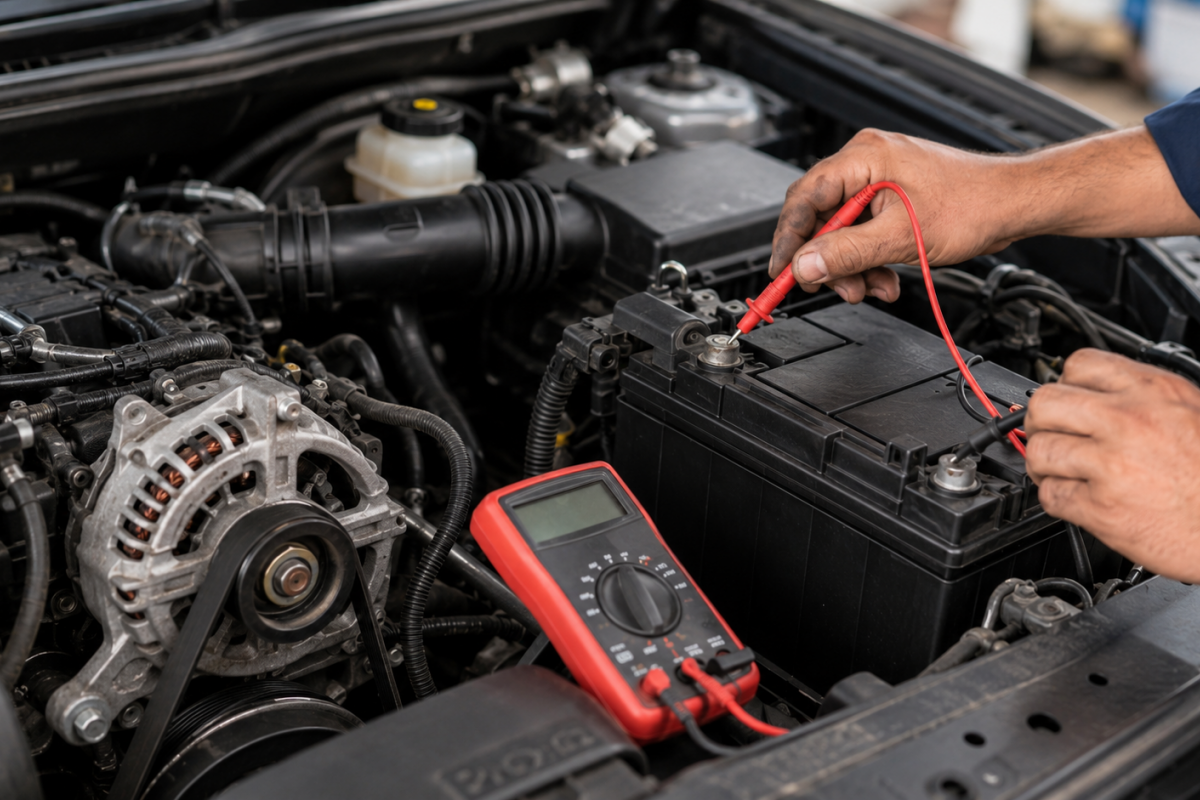
Automotive battery and alternator: what is the relationship between them?
It is common for a driver to experience difficulty starting, find the battery dead, and quickly conclude that it is time to replace it. However, the problem is not always the battery. The battery and the alternator work together to keep the vehicle's electrical system running correctly. When one of these components fails, the other ends up being affected as well, which can generate very similar symptoms and make diagnosis difficult. Therefore, understanding how the battery and alternator work together is essential to identify the source of possible failures and ensure that the electrical system operates safely and efficiently. When the battery needs to be replaced, it is also important to check whether the charging system is operating correctly to preserve the performance of the new component.
Continue reading
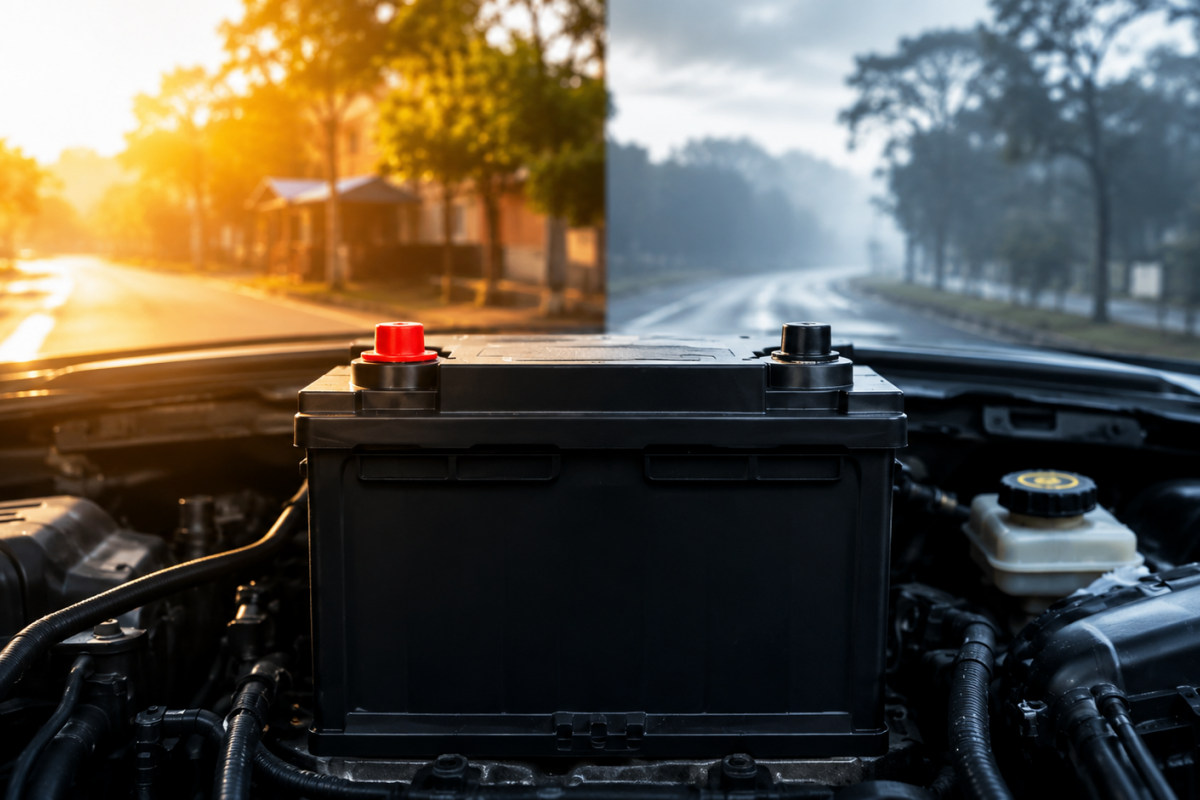
How temperature influences the useful life of the automotive battery
The automotive battery is constantly exposed to different environmental conditions. In some regions, intense heat predominates for much of the year. In others, lower temperatures become a challenge for the vehicle's electrical system. Although many drivers associate battery problems only with usage time, temperature is one of the factors that most influences its durability and performance. Both excessive heat and intense cold affect the chemical reactions that take place inside the battery, accelerating wear processes and reducing its ability to supply energy.
Continue reading