What’s the difference between a 50Ah and a 60Ah battery? Understand which one to choose
The question between 50Ah and 60Ah is very common, especially for those who need to replace a battery and want to know whether it’s possible to increase or decrease the amperage without harming the vehicle. There is a difference, and it has an impact on daily use. Before comparing 50Ah and 60Ah batteries, it’s important to understand that Ah (ampere-hour) represents the battery’s capacity—how much energy it can store and deliver over time.

What is the difference between 50Ah and 60Ah?
The difference lies in energy storage capacity: a 60Ah battery can support a higher electrical load than a 50Ah battery.
The higher the Ah rating, the greater the battery’s ability to meet the vehicle’s electrical demand.
What changes in practice between 50Ah and 60Ah?
In practical terms, a 60Ah battery offers greater autonomy and tends to handle more electrical accessories.
Comparison:
- 50Ah: recommended for compact cars with low electrical consumption
- 60Ah: recommended for larger vehicles or those with more electronic systems
The 10Ah difference may seem small, but in real-world use it makes a noticeable difference in energy availability.
Does the car perform better with a 60Ah battery?
It depends. The car only performs better if it is designed to support that amperage.
Advantages of a 60Ah battery when compatible:
- Lower risk of discharge on short trips
- Greater stability when using air conditioning and headlights
- Better tolerance for intensive urban use
That doesn’t mean every car should use a 60Ah battery.
Can I replace a 50Ah battery with a 60Ah one?
In many vehicles, yes. But it’s essential to check whether the alternator and the physical battery tray can support it.
When it’s allowed:
- The manufacturer allows variation
- The alternator supports the load
- The battery fits in the original tray
When it’s not recommended:
- The vehicle has a low-capacity alternator
- The car is very compact
- The replacement goes against the owner’s manual
The safest rule: always follow the vehicle’s original specification.
Can I replace a 60Ah battery with a 50Ah one?
This is not recommended. A 50Ah battery may not support the vehicle’s electrical demand.
Common risks include:
- Slow engine starts
- Dashboard flickering
- Rapid battery discharge
- Reduced battery lifespan
This behavior is directly related to the vehicle’s electrical consumption and situations where the battery loses charge sooner than expected, as detailed in this content about why a car battery discharges quickly.
For this reason, the swap is only safe when the vehicle originally uses a 50Ah battery.
Does the Ah difference affect battery lifespan?
Not directly, but an undersized battery (lower Ah than required) will wear out much faster.
A 60Ah battery may last longer than a 50Ah one only when installed in a vehicle that truly requires the higher capacity.
In summary, the difference between 50Ah and 60Ah is:
- A 60Ah battery stores more energy than a 50Ah
- A 60Ah battery is better for vehicles with higher electrical consumption
- A 50Ah battery works well in compact cars
- Replacing 50Ah with 60Ah may be allowed
- Replacing 60Ah with 50Ah is rarely recommended
- The vehicle owner’s manual always has the correct answer
Still unsure which amperage is right for your car? Contact Tudor. Specialized technical support can help determine the correct specification for your vehicle.
Read also

What happens when a car sits unused for a long time?
Not every vehicle is driven long distances every day. Many people own a second car, use their vehicle only on weekends, or leave it unused during extended trips. Although this situation may seem harmless, long periods without use can directly affect the automotive battery. Even with the engine turned off, some vehicle systems continue to consume power, and the battery itself naturally loses charge over time. If this period is prolonged, the risk of discharge, sulfation, and reduced service life increases significantly. Understanding what happens when a car remains unused for a long time helps preserve the battery and avoid surprises when it is time to use the vehicle again.
Continue reading
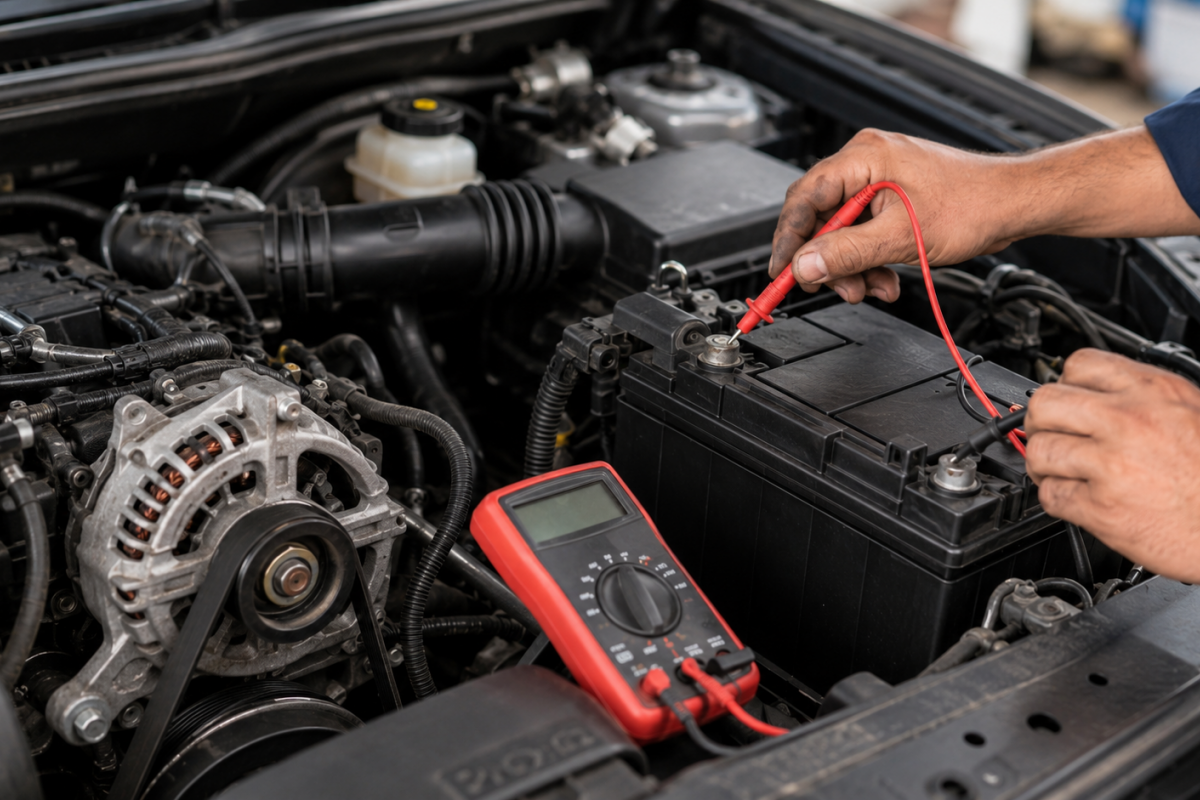
Automotive battery and alternator: what is the relationship between them?
It is common for a driver to experience difficulty starting, find the battery dead, and quickly conclude that it is time to replace it. However, the problem is not always the battery. The battery and the alternator work together to keep the vehicle's electrical system running correctly. When one of these components fails, the other ends up being affected as well, which can generate very similar symptoms and make diagnosis difficult. Therefore, understanding how the battery and alternator work together is essential to identify the source of possible failures and ensure that the electrical system operates safely and efficiently. When the battery needs to be replaced, it is also important to check whether the charging system is operating correctly to preserve the performance of the new component.
Continue reading

How temperature influences the useful life of the automotive battery
The automotive battery is constantly exposed to different environmental conditions. In some regions, intense heat predominates for much of the year. In others, lower temperatures become a challenge for the vehicle's electrical system. Although many drivers associate battery problems only with usage time, temperature is one of the factors that most influences its durability and performance. Both excessive heat and intense cold affect the chemical reactions that take place inside the battery, accelerating wear processes and reducing its ability to supply energy.
Continue reading