Can I use a bigger battery in my car? What changes in practice
If you have this question: can I use a battery larger than the original one? Installing a battery with higher capacity often seems like a good idea, but it doesn’t always bring real benefits and, in some cases, can cause problems in the electrical system.

Can I use a bigger battery in my car?
It depends on the electrical design of the vehicle and the specifications recommended by the manufacturer.
Using a bigger battery does not always improve performance and can cause undesirable effects if there is no compatibility.
What does using a bigger battery mean?
Using a bigger battery usually means increasing the capacity (Ah) compared to the vehicle’s original battery.
In practice, this represents:
Greater energy storage capacity
Greater electrical autonomy with the car turned off
More tolerance for the use of accessories
However, this does not automatically mean better vehicle operation.
Does a bigger battery improve the car’s starting?
Not necessarily.
Starting power is directly related to CCA (Cold Cranking Amps) and not only to the battery capacity. A bigger battery only improves starting if the CCA is adequate for the engine and if there is compatibility with the electrical system.
This point is explained in detail in content about what CCA is, which shows why capacity and starting power are different things.
Can using a bigger battery cause problems?
Yes, depending on the vehicle.
The most common problems include:
Alternator overload
Irregular operation of the charging system
Incomplete battery charging
Reduced battery lifespan
Electrical instability in modern vehicles
In current cars, the alternator does not work constantly. The electronic control unit manages when and how the battery should be charged. When the installed battery is outside the original specification, this management may stop working correctly.
When is it safe to use a bigger battery?
In some cases, the replacement may be acceptable, as long as all technical conditions are respected.
It is usually safe when:
The manufacturer allows capacity variation
The alternator supports the higher capacity
The physical space fits the battery
The increase in capacity is small and compatible
A common example is replacing a 50Ah battery with a 60Ah battery.
Even in these cases, the recommendation is always to confirm in the vehicle manual or with a technical specialist.
Does a bigger battery increase lifespan?
Not always.
A bigger battery only tends to last longer when the vehicle actually requires that capacity. When installed in a car that does not need it, the battery may:
- Operate outside the ideal range
- Receive incomplete recharges
- Suffer accelerated wear
Durability is much more closely related to proper compatibility, daily use, and the condition of the electrical system, as we explain in the article How long does a car battery last?
Does using a bigger battery solve frequent discharge?
In most cases, no.
When the battery discharges frequently, the most common causes are:
Parasitic drain
Use of the car only on short trips
Alternator failure
Internal battery wear
These factors are detailed in the content Why does the battery drain quickly?, which helps identify the real problem before replacing the battery.
What is more important than using a bigger battery?
More important than choosing a bigger battery is choosing the correct battery.
The factors that really make a difference are:
- Correct capacity for the vehicle
- Adequate CCA for the engine
- Compatible technology (conventional, EFB, or AGM)
- Manufacturing quality and electrical stability
Batteries developed with strict industrial processes present more predictable electrical behavior and a lower risk of premature failures. Tudor batteries follow specific technical criteria for different applications, respecting the electrical demand level of each vehicle.
Summary
Using a bigger battery in the car does not automatically mean more performance or greater durability.
This change is only safe when it respects the vehicle’s electrical design, the alternator’s capacity, and the specification defined by the manufacturer.
Batteries outside the standard can generate:
- Electrical instability
- Premature wear
- Recurring failures in the charging system
Therefore, more important than using a bigger battery is using the correct battery for your car.
To go deeper into this and other technical topics, visit the Tudor blog, where you will find content about specifications, lifespan, battery technologies, and electrical system behavior.
If there are still doubts about which battery to use in your vehicle, Tudor’s specialized technical support can guide you in making the correct choice, according to the car model and usage pattern.
Read also

What happens when a car sits unused for a long time?
Not every vehicle is driven long distances every day. Many people own a second car, use their vehicle only on weekends, or leave it unused during extended trips. Although this situation may seem harmless, long periods without use can directly affect the automotive battery. Even with the engine turned off, some vehicle systems continue to consume power, and the battery itself naturally loses charge over time. If this period is prolonged, the risk of discharge, sulfation, and reduced service life increases significantly. Understanding what happens when a car remains unused for a long time helps preserve the battery and avoid surprises when it is time to use the vehicle again.
Continue reading
Automotive battery and alternator: what is the relationship between them?
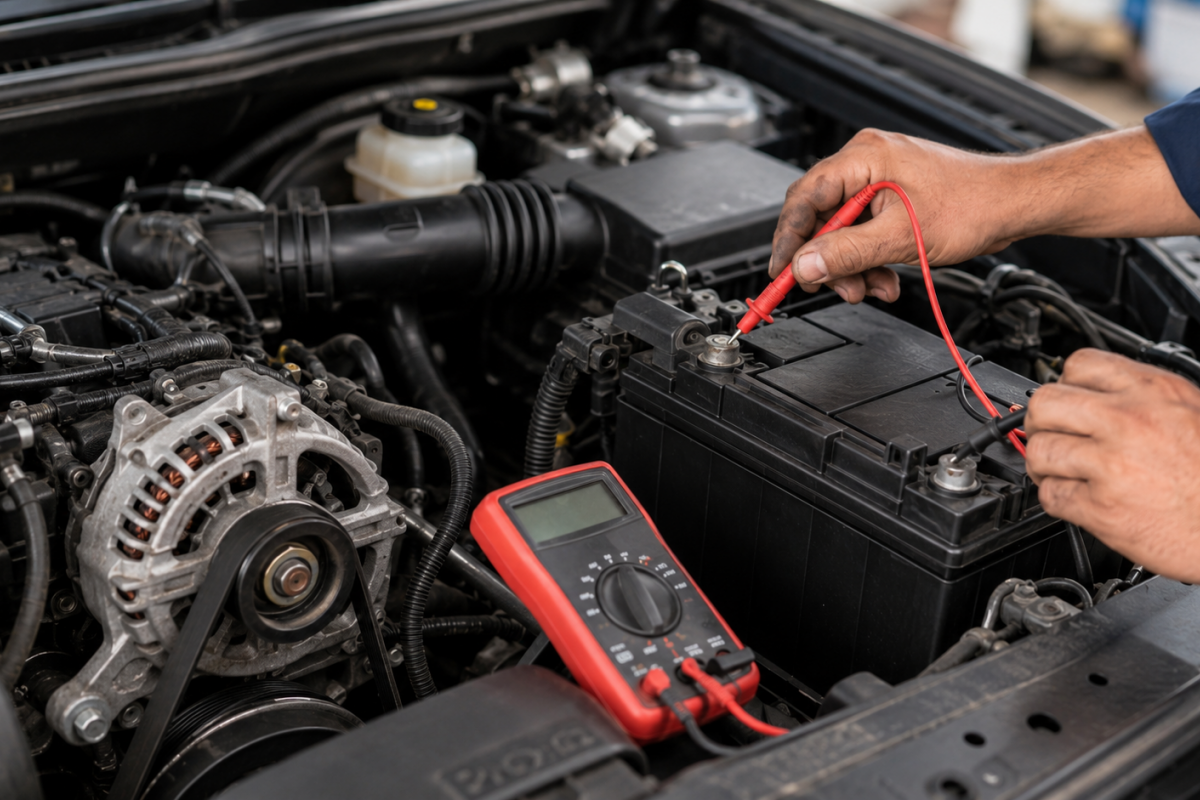
It is common for a driver to experience difficulty starting, find the battery dead, and quickly conclude that it is time to replace it. However, the problem is not always the battery. The battery and the alternator work together to keep the vehicle's electrical system running correctly. When one of these components fails, the other ends up being affected as well, which can generate very similar symptoms and make diagnosis difficult. Therefore, understanding how the battery and alternator work together is essential to identify the source of possible failures and ensure that the electrical system operates safely and efficiently. When the battery needs to be replaced, it is also important to check whether the charging system is operating correctly to preserve the performance of the new component.
Continue reading
How temperature influences the useful life of the automotive battery
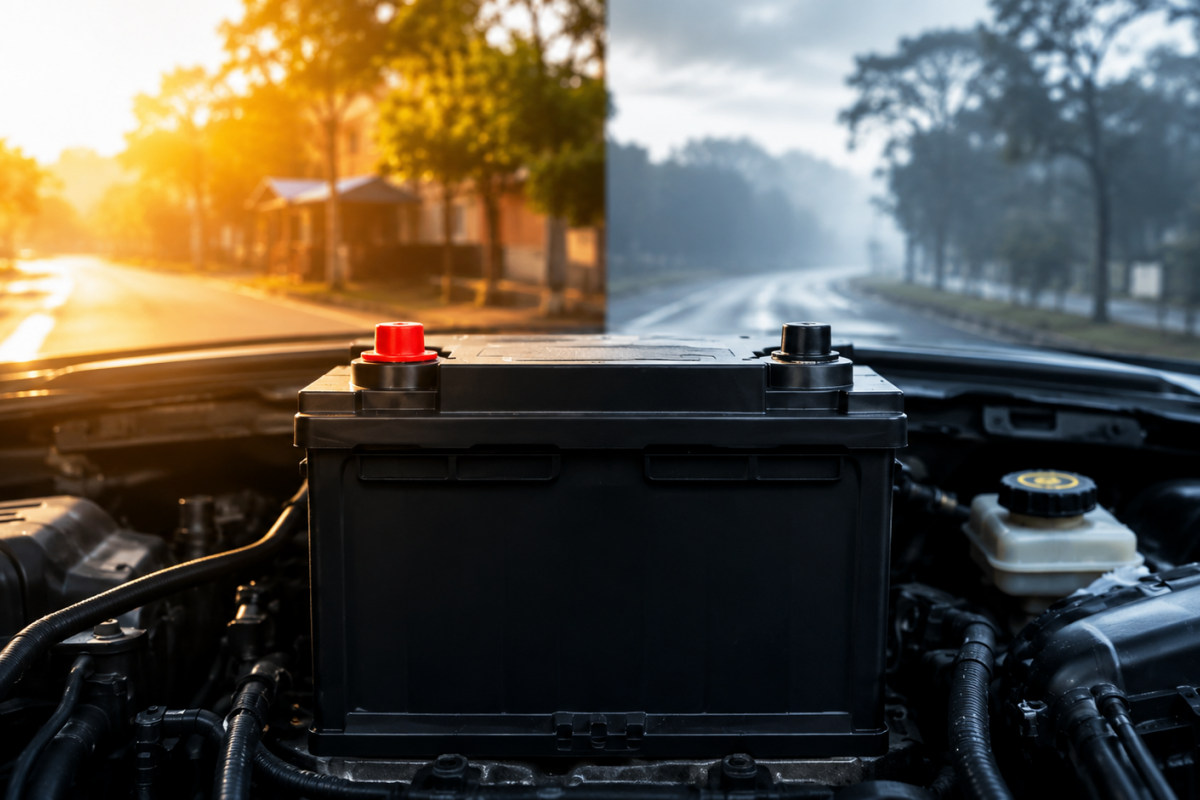
The automotive battery is constantly exposed to different environmental conditions. In some regions, intense heat predominates for much of the year. In others, lower temperatures become a challenge for the vehicle's electrical system. Although many drivers associate battery problems only with usage time, temperature is one of the factors that most influences its durability and performance. Both excessive heat and intense cold affect the chemical reactions that take place inside the battery, accelerating wear processes and reducing its ability to supply energy.
Continue reading