When Do You Need to Replace a Motorcycle Battery? The Definitive Diagnostic Guide
Motorcycles put batteries under a different type of stress than cars. Strong vibration, exposure to engine heat, and more sensitive charging systems make the battery an even more critical component. It’s not only responsible for starting. On fuel-injected motorcycles, the battery provides voltage stability for sensors, the ECU, the fuel pump, and the digital cluster. Knowing when to replace it is what separates preventive maintenance from an unexpected breakdown.
What really wears out a motorcycle battery?
The main enemy of a motorcycle battery is sulfation.
When a battery stays partially discharged for too long, lead sulfate crystals harden on the internal plates. Over time, these crystals can no longer be reversed during recharging.
This leads to:
- Increased internal resistance
- Reduced active plate area
- Lower ability to deliver starting current
It’s common for a battery to show 12.4V at rest and still fail to start the bike. That’s because static voltage does not equal real current-delivery capability.
Motorcycles that sit unused for many days are the most affected.
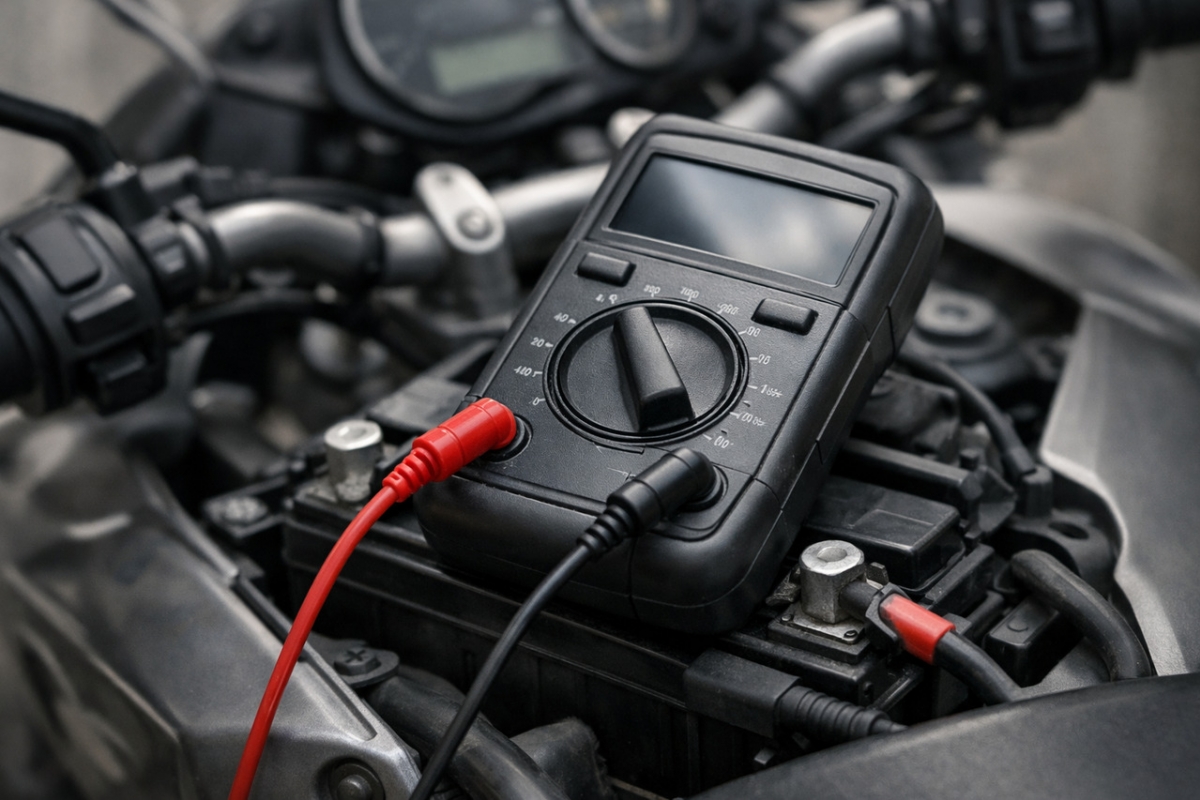
How to diagnose correctly with a multimeter
A technical diagnosis involves two main tests.
1) Resting voltage
After the bike has been off for at least 1 hour:
-
12.6V to 12.8V → healthy battery
- 12.2V or lower → needs charging or early degradation
Values below 12.0V indicate deep discharge.
2) Cranking voltage drop test
When you press the start button, voltage should not drop below 9.6V.
If voltage falls to 8V or 7V under starter load, the battery has lost its ability to sustain charge delivery.
This is one of the clearest signs that replacement is needed.
If you want to understand the early symptoms before reaching this stage, also see the article on how to tell if a motorcycle battery is failing.
Electronic warning signs before total failure
On modern motorcycles, the battery often gives “warnings” before it dies.
The main ones are:
- Cluster turning off or rebooting during starting
- Intermittent fuel-injection faults
- Irregular idle right after starting
- Flickering lights (cluster and headlight)
This happens due to a sudden voltage drop, also known as voltage sag.
Vibration and internal mechanical wear
Motorcycles are more exposed to vibration than cars.
In conventional batteries, vibration can cause active material to shed from the internal plates, accumulating at the bottom of the case and triggering an internal short circuit.
That’s why choosing the right technology matters.
When is replacement non-negotiable?
Replace the battery immediately when:
- The battery is swollen or deformed
- Resting voltage does not exceed 12.4V even after a slow charge
- Cranking voltage drop falls below 9.5V
- The motorcycle shows recurring issues after recharging
- The battery is already 2–3 years old and cranking is noticeably heavier
If the bike often discharges overnight or after only a few days sitting, it’s also worth checking content on why a motorcycle battery drains overnight to rule out charging-system issues.
Is it worth waiting until the battery completely dies?
No.
A severely degraded battery can overload:
- The stator
- The voltage regulator/rectifier
- The charging system
Replacing it at the right time helps protect the rest of the electrical system.
Conclusion
In short, you need to replace a motorcycle battery when it can no longer deliver stable starting current, even if the voltage still looks acceptable at rest.
The main technical indicators are:
- Voltage drop below 9.6V during cranking
- Resting voltage below the ideal range
- Intermittent electronic symptoms
- Advanced sulfation
- Service life beyond 2–3 years
The right battery ensures stable fuel-injection operation, reliable starts, and safer riding.
Tudor’s motorcycle battery line includes models engineered for high starting reliability and greater resistance under severe use. If you’re unsure which model is best for your bike, contact Tudor’s technical team for the safest guidance on proper application and the correct battery choice.
Read also
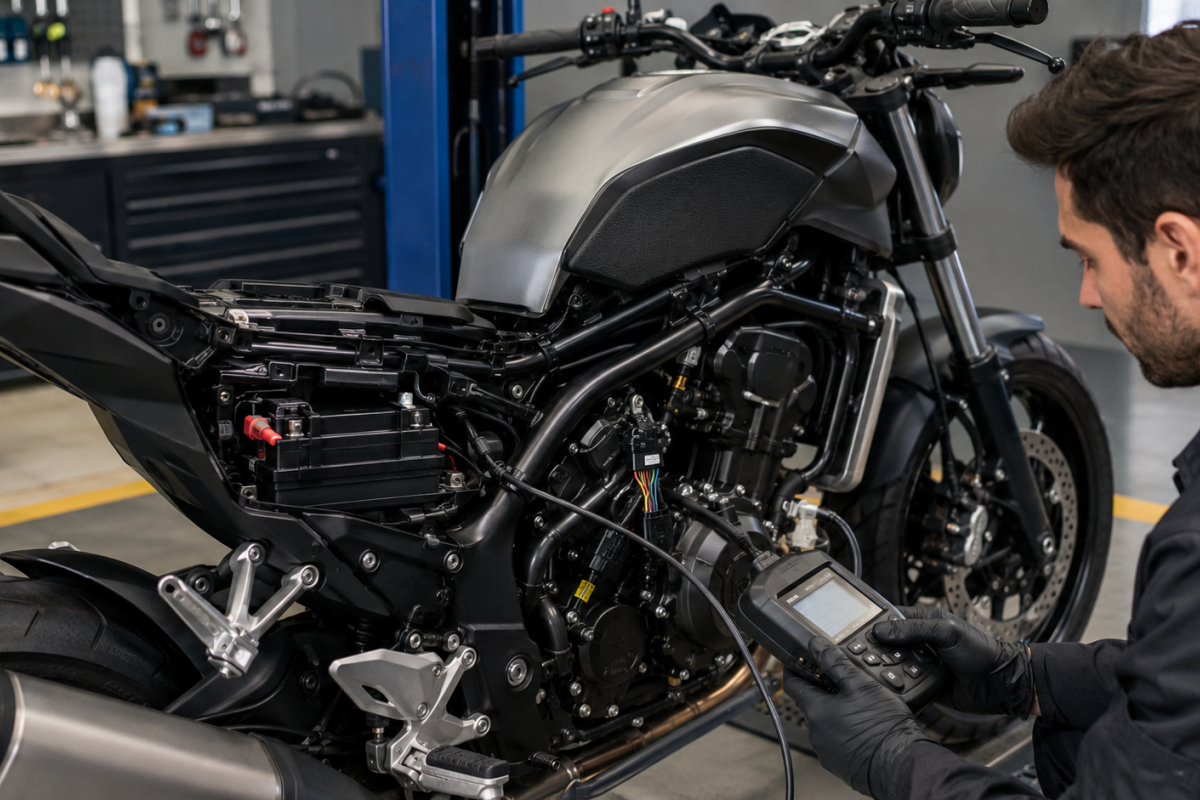
Battery for motorcycles with electronic fuel injection: what changes when choosing?
Electronic fuel injection transformed the way motorcycles operate. In addition to providing greater efficiency, fuel economy and lower pollutant emissions, this technology made the electrical system much more important to motorcycle performance. Whereas the battery was once remembered mainly for starting, today it also plays an essential role in powering the electronic components responsible for engine operation. For this reason, many riders have the same question: does a motorcycle with electronic fuel injection need a different battery? The answer is that the battery must meet the motorcycle’s specifications and provide performance compatible with the demands of the electrical system. In this article, you will understand what changes when choosing the battery and why this component is essential to modern motorcycles.
Continue reading
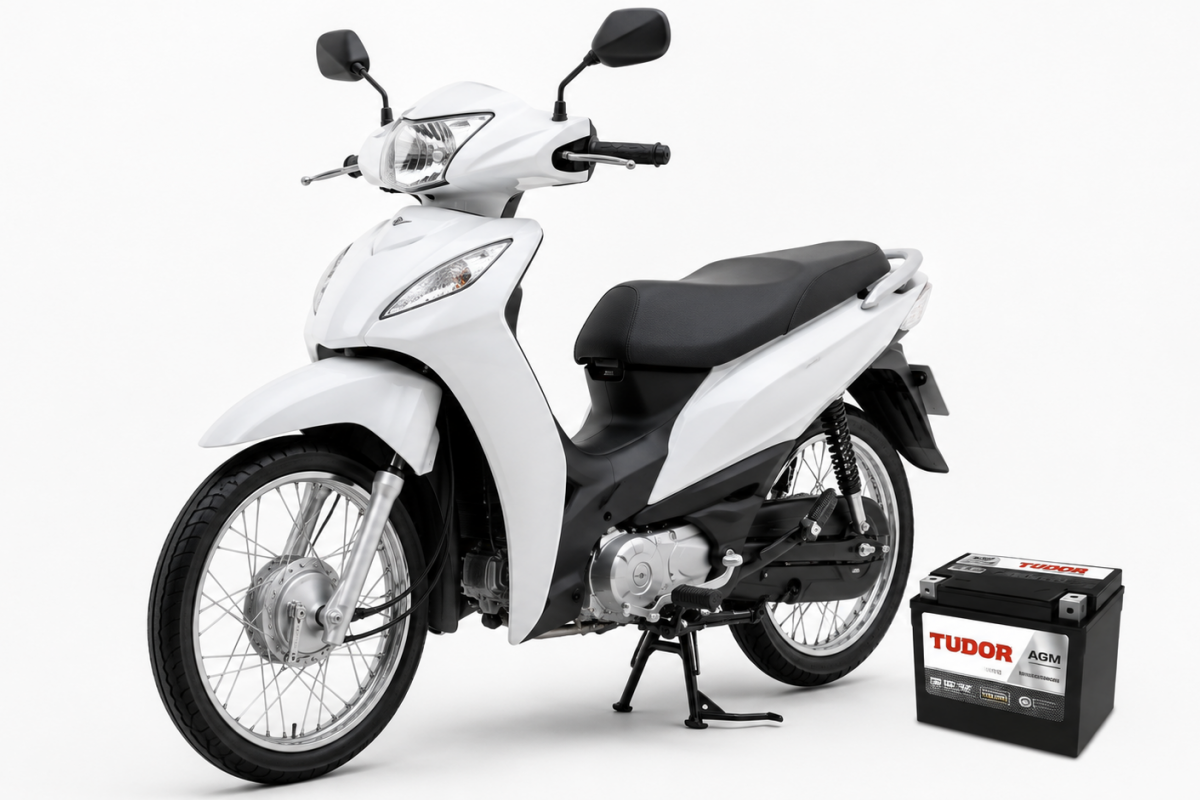
Ideal battery for the Honda Biz: learn how to choose the right one
The Honda Biz is one of the most popular motorcycles in Brazil. Manufactured since 1998, it is part of the daily lives of millions of riders. Whether for daily commuting, work, deliveries, or short trips, it stands out for its practicality, fuel economy, and reliability. Although many owners simply search for “battery for Honda Biz,” not every version uses the same model. In addition, this motorcycle’s typical usage profile, usually marked by many short trips and frequent starts, requires a battery capable of delivering consistent performance throughout its service life. In this article, you will learn which battery is ideal for each Honda Biz version, which characteristics should be considered, and why choosing the correct application makes all the difference.
Continue reading

How does vibration affect motorcycle battery life?
Motorcycles are constantly exposed to operating conditions that place heavy demands on the battery. In addition to frequent starts and temperature variations, there is another factor that often goes unnoticed but has a major impact on component durability: vibration. While riding, especially on uneven roads, dirt roads, or routes with frequent impacts, the battery is subjected to continuous movement that can accelerate internal wear. Therefore, understanding how vibration affects battery operation helps explain why some applications require more resistant technologies and why choosing the right battery makes a difference in motorcycle reliability.
Continue reading